CONSERVED FOREVER
Continuing a Partnership on Nevada’s Sagebrush Steppe
PHOTO: Scott Smith - DanitaDelimont.com
by Lee Lamb
On the eastern Nevada steppe, an oasis hides in the sagebrush. It’s a 2,000-foot-long cave and from it comes groundwater, the source of life in the high desert. It’s why the surrounding area is called Cave Valley, and why that valley attracts so many animals, including elk, mule deer, pronghorns, greater sage grouse, pygmy rabbits and many others.
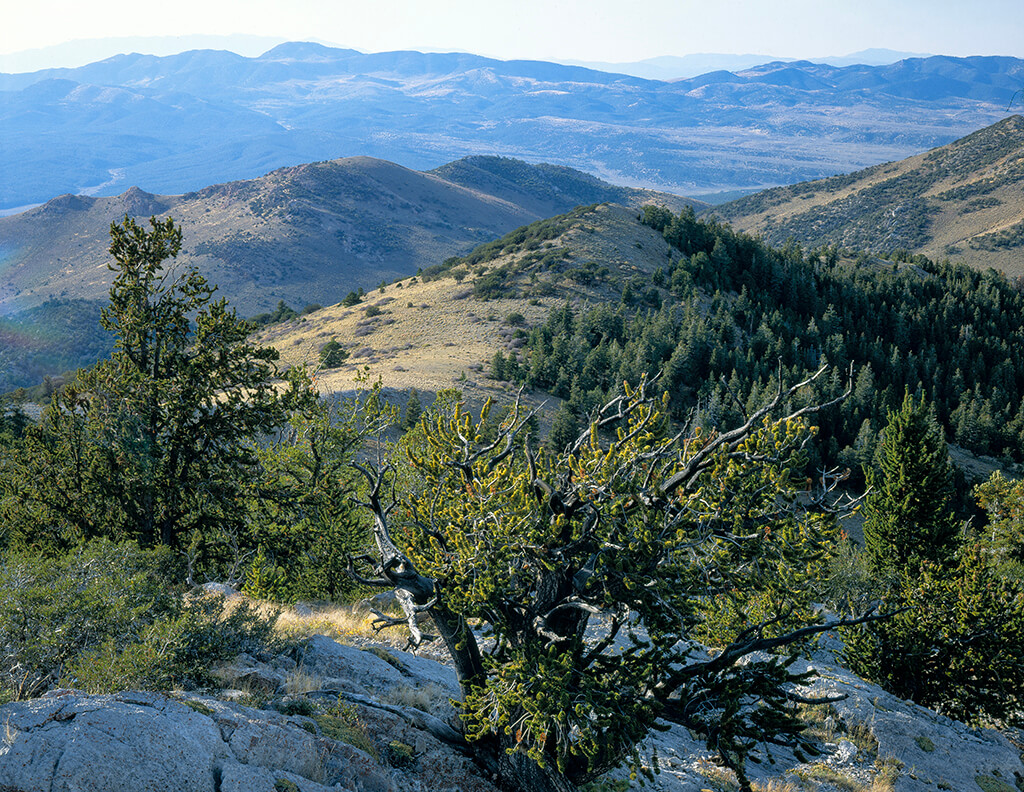
In 2013, a supportive landowner, working in partnership with the Rocky Mountain Elk Foundation and the Southern Nevada Water Authority, secured key habitat in the area by donating a 1,480-acre voluntary conservation agreement (also known as a conservation easement) on the sprawling Cave Valley Ranch. Here, springs and seeps bring water to the surface. Mount Grafton—where elk climb through stands of aspen and bristlecone pine to escape the summer heat—rises from the valley. The easement abuts BLM property and the 78,750-acre Mount Grafton Wilderness, connecting summer and winter range for elk and mule deer. Now, it can never be subdivided for development.
That agreement was just the start of an ongoing, decade-plus relationship between RMEF and Cave Valley Ranch.
In 2019, RMEF awarded a grant to help with habitat enhancement on the property. Over the next three years, ranch manager Dana Johnson and his team removed encroaching piñon and juniper on 1,100 acres of big game corridors through a mix of lop-and-drop and lop-and-pile techniques. The piles were then burned, and the openings reseeded. The team also added four elk jumps along the ranch’s fenceline, making it easier for herds to cross between public and private lands.
Removing the encroaching conifers helps retain native sagebrush—a plant uniquely suited for arid conditions. The shrubs hold moisture for long periods and provide important late-summer browse for wildlife and livestock alike. Elk, mule deer and pronghorns nibble on sagebrush poking above the snow during the winter months. Sagebrush is also the primary food source for greater sage grouse. Two sage grouse leks, or breeding grounds, are located on Cave Valley Ranch.
Nevada’s basin country can average as little as six inches of precipitation per year. Private landowners play an important role in ensuring elk and other wildlife have the extended range they need for year-round forage and water resources. This ongoing partnership is just one example of RMEF’s continued support for its voluntary conservation agreement partners long after the ink on an agreement has dried.
“RMEF is unique in the land trust world in that following a voluntary conservation agreement transaction, RMEF provides ongoing services,” explains Susanne Roller, RMEF’s regional habitat manager. “The cost of continuing to improve habitat for elk and other wildlife is high and RMEF is honored to walk alongside these conservation‑minded landowners.”