INSIDE OUTDOORCLASS
To Build a Fire: Backcountry Survival with John Barklow
PHOTO: RMEF
by Bugle Staff
Most of us are familiar with Jack London’s gripping short story “To Build a Fire,” which depicts tenuous life on the Yukon Trail. A fire is key to survival, and the main character fails to keep one going. Though technology has sprinted forward since London penned that tale in the early 1900s, OutdoorClass instructor John Barklow says a similar scene is still all-too possible if you run into trouble on a backcountry hunt and you aren’t prepared.
Barklow is a U.S. Navy diver whose 26-year military career included training SEAL teams and other special operations forces to survive in cold weather. In his OutdoorClass Backcountry Survival course, he discusses what to prioritize if you find yourself in a survival situation. Some of his proven tips may surprise you, including what he says about fire.
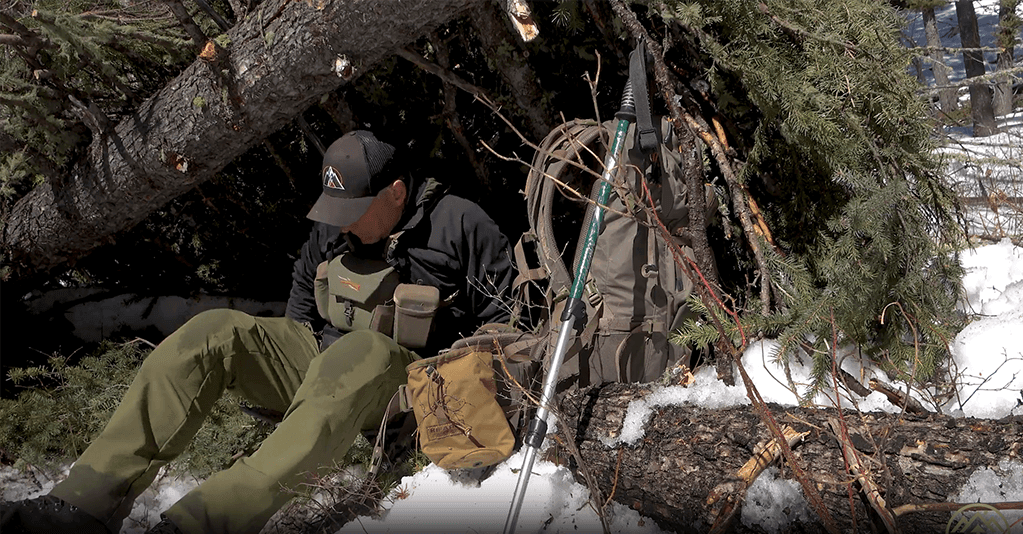
For most people, the answer to every crisis in the backcountry is, “I’ll just build a fire.” But Barklow cautions that fire is “a luxury” in the backcountry. A fire should not be your top priority in a survival situation. Instead, your first move should be to seek shelter. If you are caught in a storm away from camp with a sprained ankle, don’t take out your matches; unzip your pack and take out your clothing layers. People often think of shelter as a physical location, but with advancements in technical hunting clothing, the first level of shelter is the puffy jacket and rain gear that you should be carrying each time you go out. Remember, your body is your most reliable source of heat. Regulating that heat with clothing and nutrition is primary. After layering up, then you can decide to head below treeline, find a natural shelter, or construct a lean-to or A-frame. After you have adequate shelter, you may be able to turn your thoughts to a fire.
Taking time to attempt fire construction before you find shelter could work against you. You may be shocked at how fast your hands go numb or your mind becomes cloudy when your body heat drops. The wet, cold conditions where you’ll need a fire often make it impossible or impractical to start one with the fuel available. Or if you do manage to start one, it may not generate enough heat to warm you up.
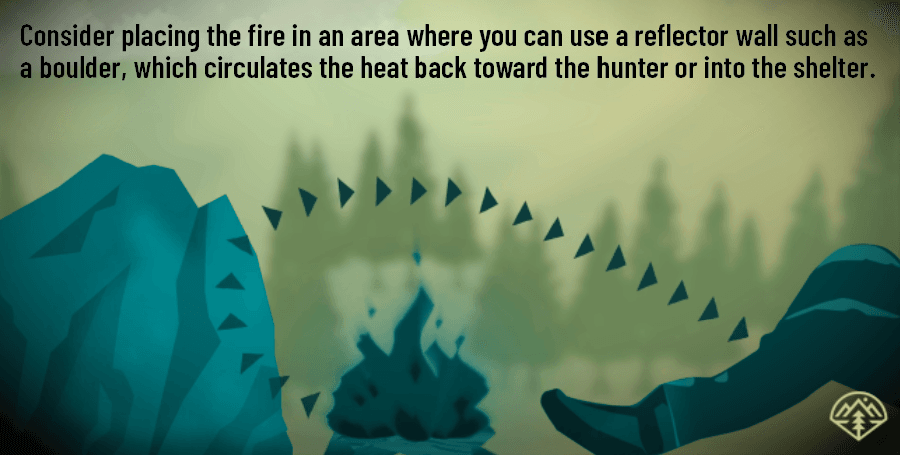
Although it shouldn’t be your first priority, every hunter should know how to build a fire. Barklow recommends deciding on what purpose your fire will serve before you start it. Is the goal to warm up a hypothermic patient? To cook? To provide warmth for a shelter? Or to offer a social circle and psychological warmth? A fire’s intent determines its location, size and shape. For example, a round fire might be the perfect configuration for everyone to gather around and ride out a storm during a spring bear hunt, whereas a 6- to 8-foot-long fire might be best for providing all-night warmth for your lean-to or other improvised shelter. Consider placing the fire in an area where you can use a reflector wall such as a boulder, which circulates the heat back toward the hunter or into the shelter.
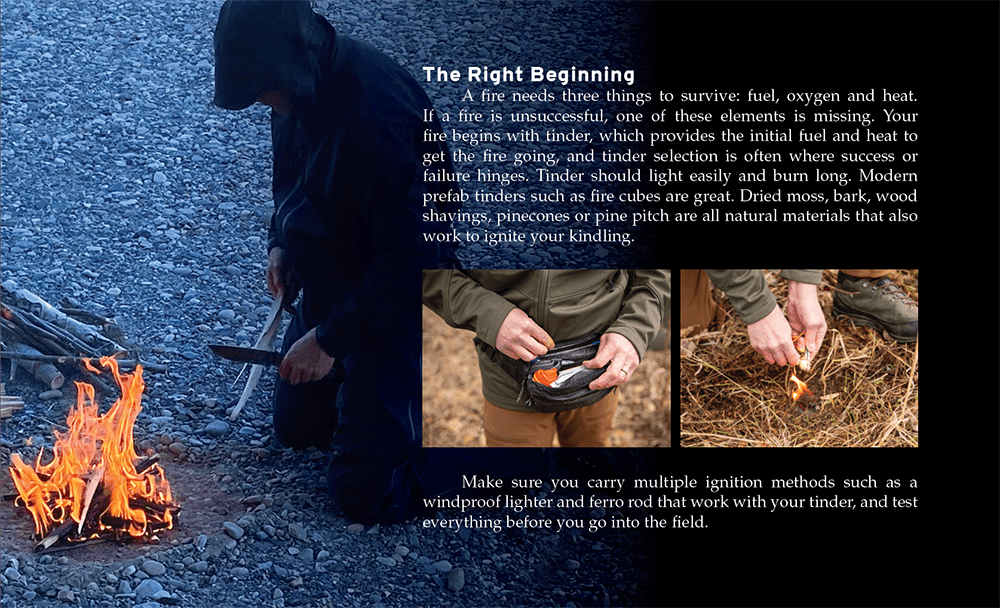
When you’re building a fire, a good rule is to collect three- to four-times more wood than you think you’ll need. You’re looking for dry wood that easily breaks or snaps. Start the fire with kindling the size of matchsticks, then move up to finger-size, wrist-size and so on. The tools you carry determine the type and size of the wood you can collect for your fire. Some tools to consider are:Fixed-blade knifeThis is a durable tool that allows you to chop and baton wood down to various sizes.Sharpening stoneMake sure you can sharpen your knife. A keen edge is key.Small handheld sawThis is a good tool for processing a large animal in the field but also for creating a shelter or cutting wood that may not otherwise be an option.
Make sure to test all your gear before you take it into the field. If your first attempt to construct a shelter, gather wood and build a fire is in a survival situation, your chances are lower. Consider all scenarios, make plans and practice, practice, practice.
Want to learn more about survival during backcountry hunts? Visit outdoorclass.com and subscribe.