Gateway to Elk Mountain
The untold story of the owners, advocates and quiet influencers who shepherded a parcel into public hands to improve access for all.
by Vivien Felker
PHOTOS: Tyson Heppner / RMEF
This is where it all started, right here,” says Mark Caywood, looking down at the GPS device clutched in his hand. “I saw this little piece of property right here, and all the landlocked public land that lay behind it.”
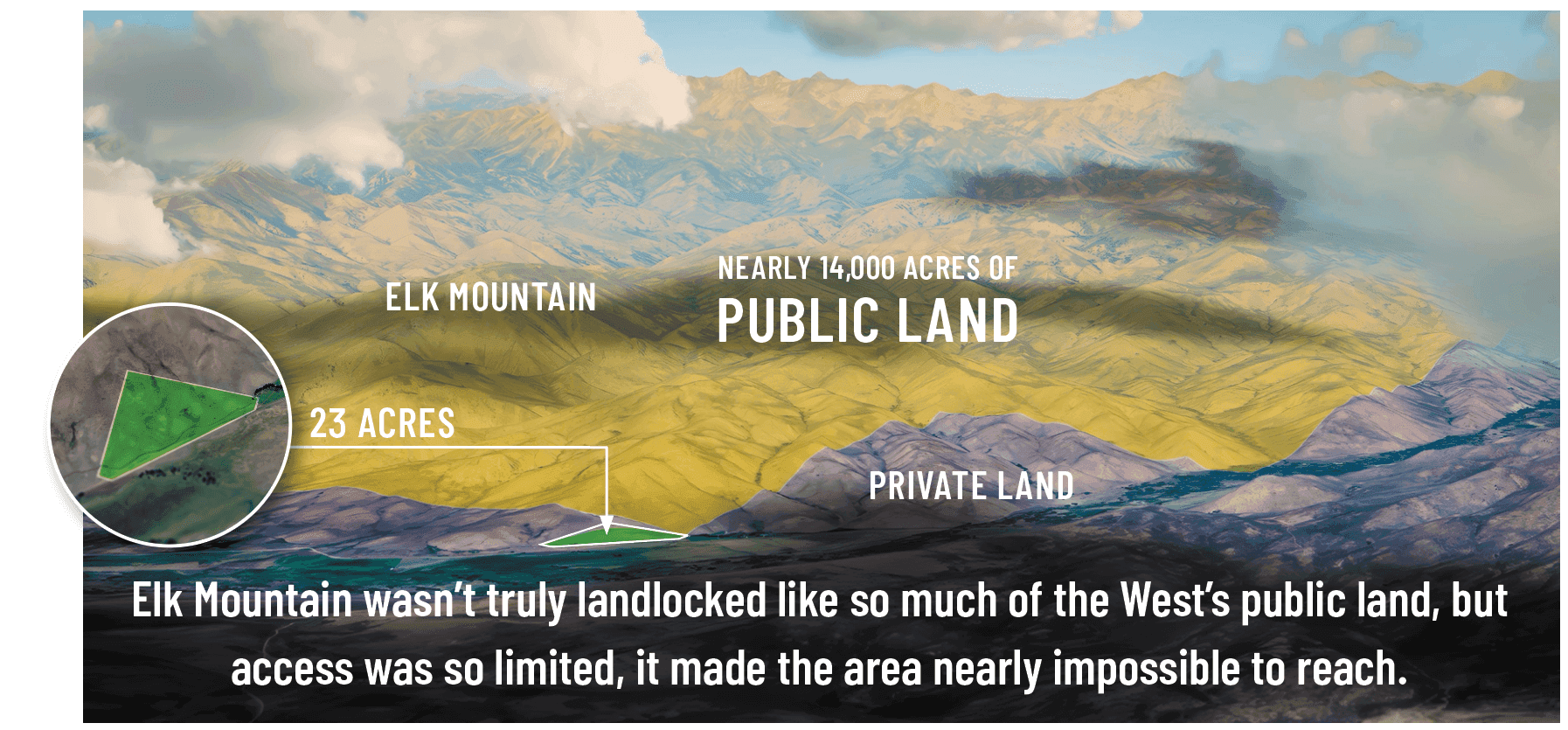
Caywood is referring to a small-but-mighty piece of land that he and others worked to acquire and convey to the Bureau of Land Management (BLM) between 2022 to 2024, improving walk-in access to nearly 14,000 acres of pristine south-central Idaho elk country.
“The best way I can put it is, this is a gateway,” he says. “The actual habitat here is rather small—it’s 23 acres—but it’s where it gets you.”
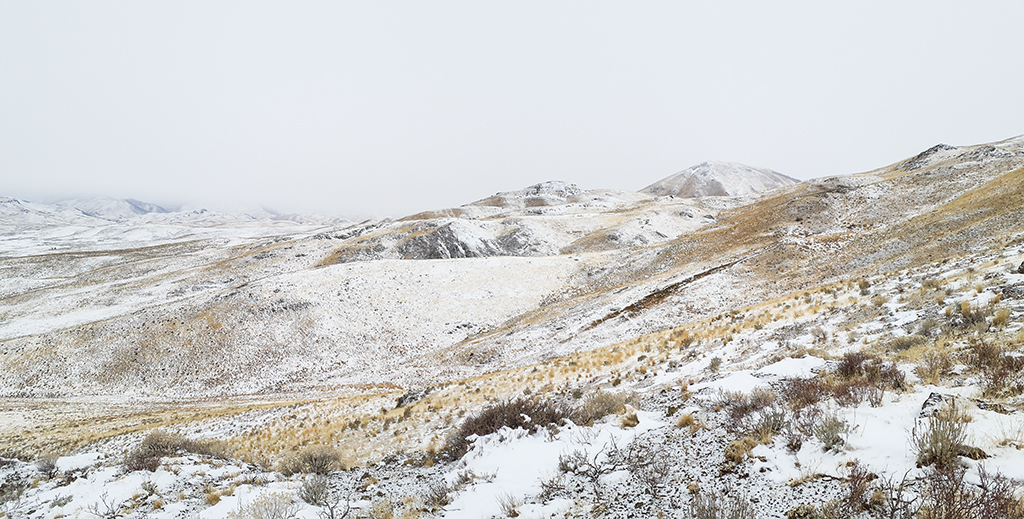
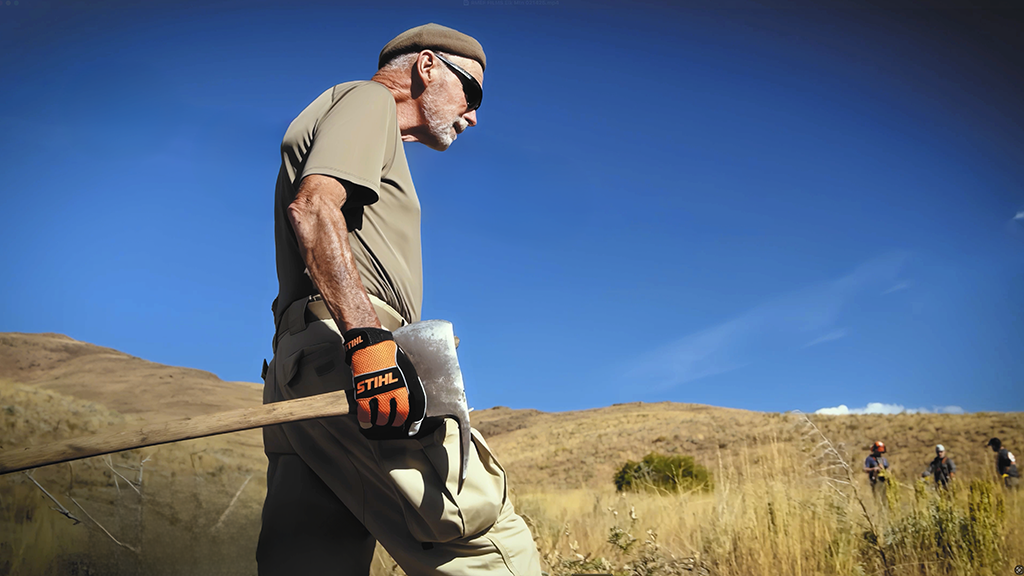
Caywood, 79, is a Hailey, Idaho, local. The town lies about 20 miles west of the 23-acre “Elk Mountain” property, named in honor of Elk Mountain, a 7,936‑foot peak where elk, mule deer and other wildlife roam. He started recreating in the area in 1984 and hasn’t slowed one bit. He’s an active man and a naturalist at heart; in the springtime he conducts what he calls “little range studies” keeping tabs on the growth of bitterbrush and other important browse. But over the years he watched as access to public land behind the Elk Mountain property blinked out.
There is only one county road running north and south that offers access to the nearly 14,000 acres of public land that holds Elk Mountain. Flanking the west side of the road and bordering the BLM land are private properties, a mix of residences and cattle ranches. Historically, a number of these properties along the road had allowed public walk-through access across their lands. But as goes the story through much of the West, many of these properties changed hands over the years, and with that came “No Trespassing” signs and an erasure of access along 12 to 15 miles of the road.
This was upsetting to Caywood, and many other locals, including his good friend, Tim Olsen. The duo struck up a perhaps surprising friendship years back when Caywood came storming into the mechanic shop Olsen owns in a manner that Olsen laughs was “pretty hot. I could tell this guy was upset.” Caywood had found dirt bike tracks on a nonmotorized section of trail, and knowing Olsen rides bikes, pinned him with the act. Olsen explained to Caywood that the tracks didn’t belong to him, even encouraging him to compare the wheel size of the tracks he’d seen to the wider tires on Olsen’s bike. Caywood came back a day later and admitted his mistake—he had the wrong guy. “And so we made amends—he went from a man who looked like he maybe wanted to kill me, to possibly my adopted grandfather today,” says Olsen. The duo goes out to lunch once a week. They’ve traveled to Alaska and covered many miles of ground together behind a bird dog.
Perhaps it was fate that these two forged a friendship under such unique circumstances, as it turned out that Olsen was a valuable teammate in helping Caywood solve this problem of access. It was a task near and dear to Olsen’s heart, as he had hunted Elk Mountain many times in the past and even pulled his first archery bull out of the area, as had Caywood.
Elk Mountain wasn’t truly landlocked like so much of the West’s public lands, but the access was so limited, it made it nearly impossible to reach. In attempts that proved futile, Olsen had trekked in on horseback from a trailhead a few miles up the road from the Elk Mountain property, but ultimately got turned around on his quest that was “maybe possible, super difficult.” To add insult to injury, Caywood described that trailhead as a “circus” that “got even more interesting when it was muddy.”
So, when the 23-acre parcel went up for sale, Caywood and Olsen agreed it was an ideal access point—it would still be a trek to get back to Elk Mountain, but doable for the dedicated hunter. “I’m one of those that likes to find solutions to things,” says Caywood. “And when this property went for sale, myself and others, like any prospective owner, wanted to see what it could offer...it wasn’t about the habitat itself, but where it took you.”
In addition to the market value, the seller factored in the acres of access into the property’s listing price, raising it exponentially. Although the BLM identified this parcel as an integral addition to its adjoining holdings, agencies such as the BLM can only pay the appraised value of a property, which in this case would fall far short of the listing price.
Caywood knew it would take a special person or entity to want to help buy this property and unlock the acres for public use. But he also knew how unfortunate it would be if the opportunity slipped away and the “No Trespassing” signs stayed up. He started calling around and connected with the Rocky Mountain Elk Foundation, an organization of which he had been a Life Member since 1989. RMEF had a keen interest in the property, but its hands were tied. Rules for how nonprofits have to operate wouldn’t allow RMEF to pay more than appraised value either. The conclusion was clear: This project would require financial support from a private source.
It didn’t take long for word of the property to reach Eric Siegfried, founder of onX, a popular mapping application, and longtime RMEF partner. Passionate about helping improve or expand access to public lands, he has a special place in his heart for small acquisitions that make big impacts after watching a parcel—once a popular walk-in access to public lands in his hometown—sell to someone who closed it off and built a house on it.
“Those are the most important properties to me that I don’t want to see lost, these small acquisitions that have a big impact where they touch a public road and it gets access for continuity of public lands,” he says.
The first time Siegfried saw the Elk Mountain property on onX, he knew there was more value to those 23 acres of dirt than what meets the eye. The terrain behind the property is steep and rough, and it would be hard to pack out an elk in the timely fashion demanded when the mercury climbs and meat becomes prone to quick spoilage.
“This is an area that is basically very hard to hunt without improved access,” says Siegfried, who knew the Elk Mountain property could solve that issue. “You could see that the parcel touched a public road and was just this tiny little sliver that was needed to make a new connection for public access.”
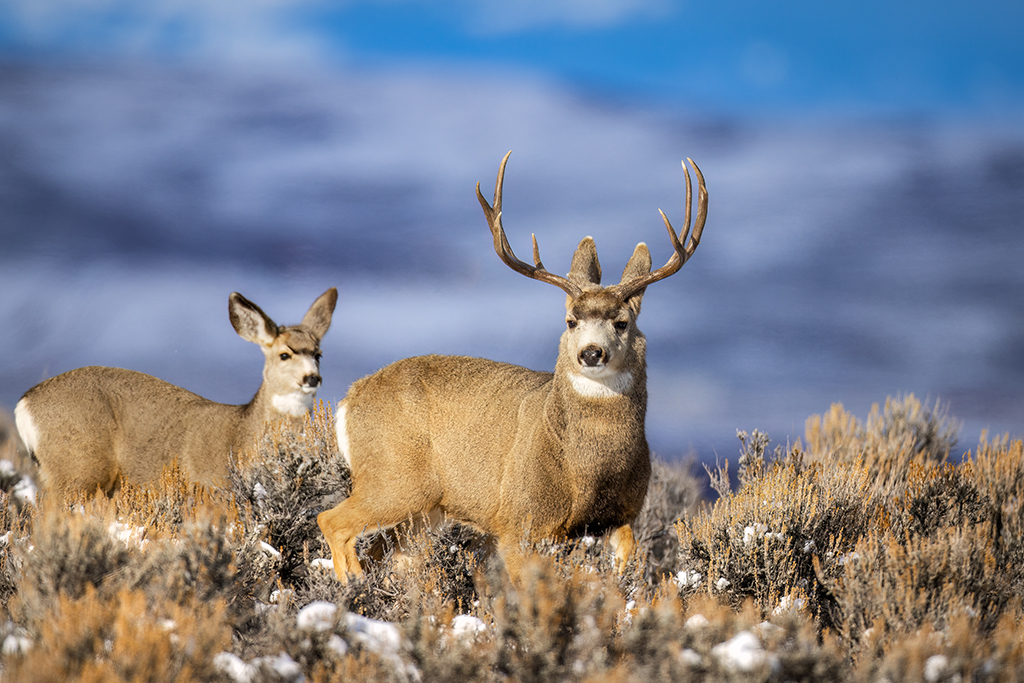
The 23 acres have been identified by Idaho Fish and Game as elk and mule deer winter range, providing refuge for herds that feed on the bitterbrush and sagebrush that dots this landscape.
He made an offer on the property in 2020, which the sellers rejected, later taking the parcel off the market only for it to crop back up in early 2021 as a residential building site. Siegfried says this was the transitional time during Covid where more people were interested in rural properties, so he held his breath.
“Thankfully it made it through the summer without anyone making an offer at their price point,” he says.
By the tail end of 2021, the owners were ready to revisit Siegfried’s prior offer. The transaction closed in early 2022, but Siegfried was already looking ahead to the next owner of the property. And with RMEF’s focus on improving hunting access, the organization was a ready and willing buyer.
“We’re really grounded in purpose when we do a project at the Elk Foundation. We want to do the right projects in the right areas,” says RMEF Managing Director of Mission Operations Jenn Doherty. “And this project sailed through our criteria; right away on the map you see that it’s a stellar project.”
The 23 acres have been identified by Idaho Fish and Game as elk and mule deer winter range, providing refuge for herds that feed on the bitterbrush and sagebrush that dots this landscape. Further, it’s part of a larger migration corridor for mule deer and pronghorns. The sagebrush steppe ecosystem is textbook greater sage grouse habitat, and the near-threatened birds seem to agree, having been documented there. Given the historic access issues within the region, it’s also been identified as an area of national priority for improved public access by the BLM, making this land even more impactful.
Siegfried sold the property to RMEF at its appraised value in 2022, but that isn’t where this story ends.
It isn’t in RMEF’s ethos to own land for the long term, and it earmarked these acres to be absorbed by BLM into its abutting public lands. But before that could happen, RMEF had plans for the property.
“Anytime the Elk Foundation acquires a property, it’s our goal to make improvements to it before we convey it to a public agency,” says Doherty.
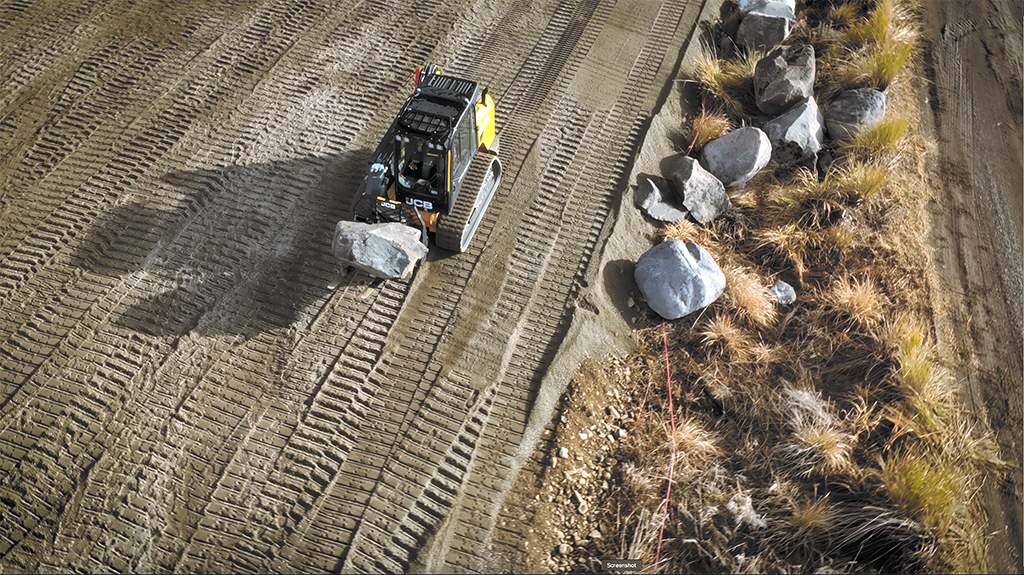
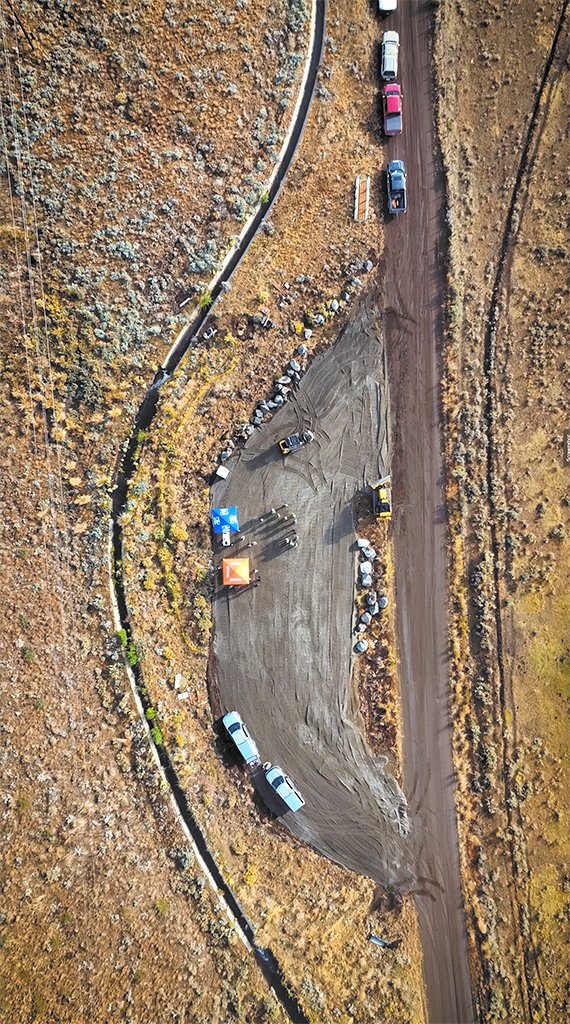
First, and perhaps most urgently, a parking lot needed to be built. When RMEF closed on the property in December of 2022, there was nowhere for vehicles and rigs pulling horse trailers to safely park off the two-lane dirt road. They needed to get a parking lot geared up for future hunting seasons. But as it turned out, finding a contractor who would travel to this remote sliver of Idaho was a challenge.
Most companies couldn’t justify trucking in material from 30 miles away in Hailey. All except Tony Cahala, manager of the Rock Yard based about 85 miles away in the town of Filer. As a hunter and RMEF member himself, he bid the job at a reasonable price, knowing he was doing much more than just making a buck by helping work on this project. “My two boys have each killed deer on Elk Mountain,” says Cahala, in the midst of one of many long September days he spent alongside his wife, Maggie, pushing dirt and gravel to shape the parking lot. The couple does everything together, often contracting with government agencies to complete stream restoration projects on travel corridors for salmon. “We’re always looking for something to do that’s going to benefit more than just us,” says Cahala. “We decided because I have such a close connection to the area, that we would come up and help.” The improvements were funded in part by support from onX via its Adventure Forever grant program and RMEF’s Torstenson Family Endowment.
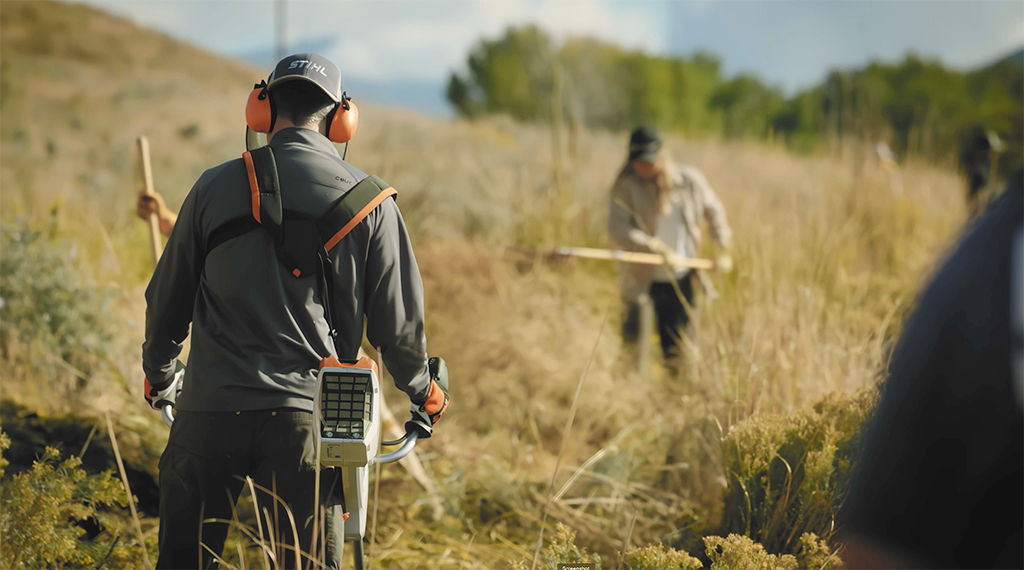
When most of the gravel had been laid and a truckload of boulders dropped at the site to create a barrier around the parking lot, the Cahalas were joined on a Thursday in September 2024 by a conglomerate of over a dozen RMEF volunteers from across the state, as well as representatives from RMEF partners including onX, Eberlestock and STIHL. They were there to help put some finishing touches on the property and ring in the creation of a stellar new way to access Idaho public lands.
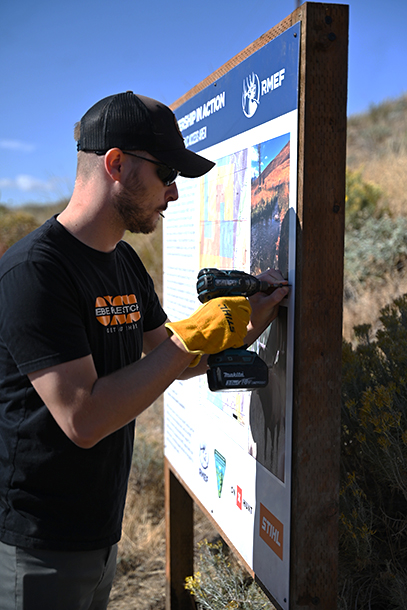
Outfitted in safety gear and tools from STIHL, one crew cleared grass and brush with STIHL brush cutters and used hand tools to etch in a new trail switch-backing up the property. Others spent the afternoon installing a sign in the parking lot explaining how the property came to be in public hands.
Jori Tate, a local, first hunted the area behind the Elk Mountain property when he was 12. Clutching a mattock spade in one hand that he was using to clear the trail, he explained that he and his three kids live just a few miles away from the new access point and plan to use it often, so they all wanted to come out and do their part to help prepare the property. “We’re an outdoor family, it’s really our lives, it’s what we do. So anytime we can help get access in an area—especially in our backyard—we’re willing.”
For many volunteers, the day provided an opportunity to peek behind the curtain and see what goes into creating new public lands. “The energy is good, I see a lot of smiles and people being willing to put the gloves on,” says onX Vertical Marketing Manager Steve Beaulieu. He and his wire‑haired pointing Griffon, Touque, drove out to lend a hand, which he says served to remind him that it oftentimes takes time, money and energy from many stakeholders to create a public land opportunity.
“If you have a chance to be a part of what makes it possible, you should,” says Beaulieu.
While Touque and the other bird dogs zipped around the sagebrush hunting for any coveys nestled within, Beaulieu and a crew of fellow volunteers installed signs along the property lines to ensure recreationists don’t inadvertently trespass while on their way through to the mass of public lands beyond.
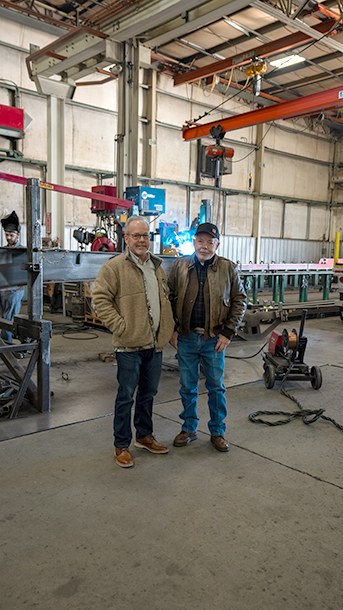
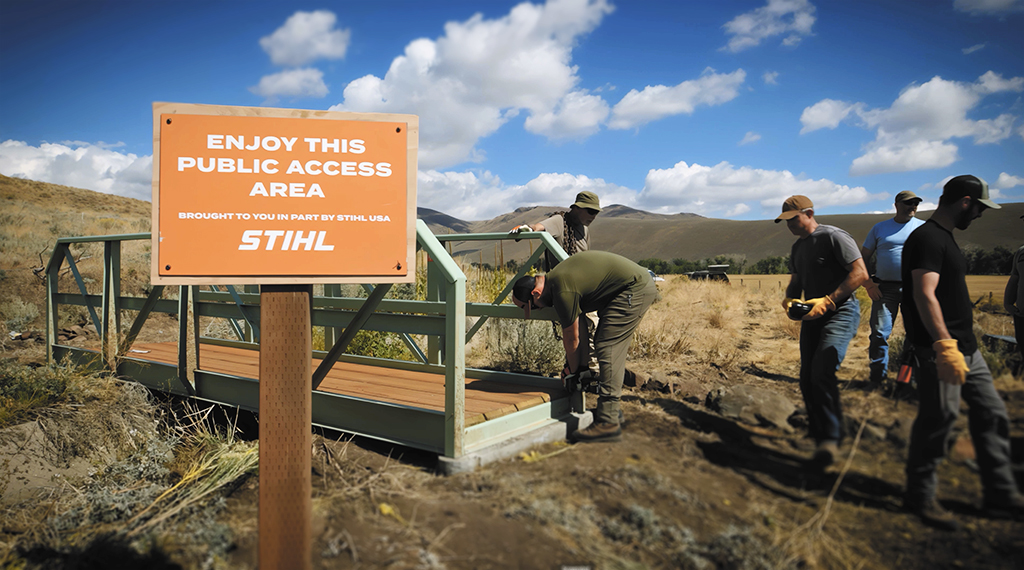
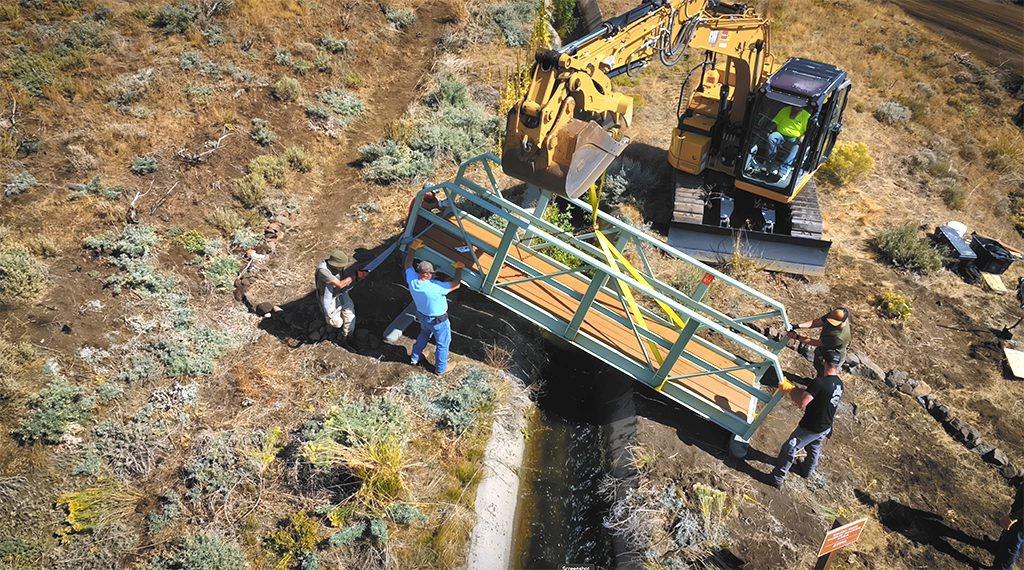
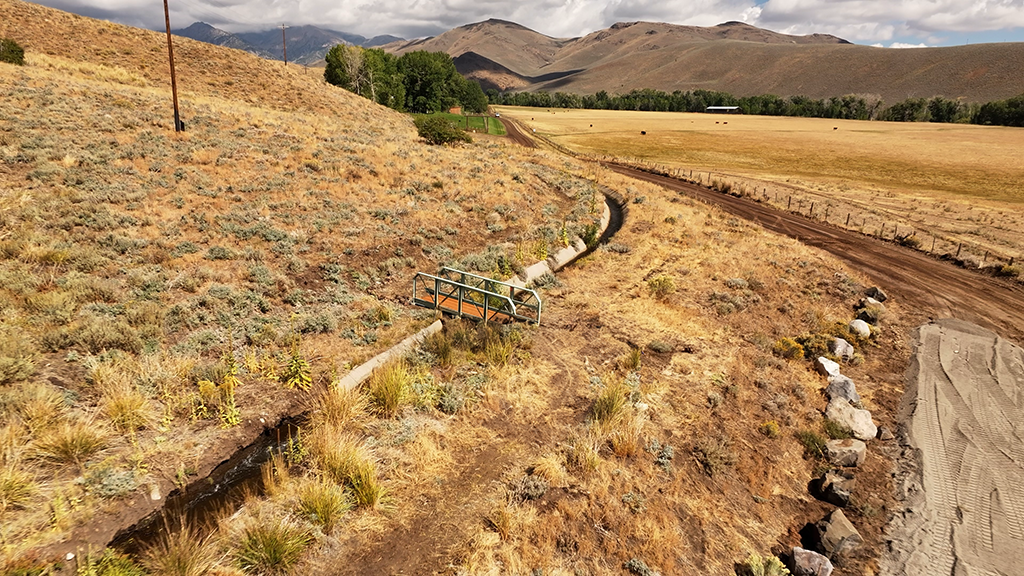
The work project occurred on a sunny day during the peak of the September elk rut—yet volunteers showed up to lend a hand, with one duo even coming off the mountain and putting a pause on their elk hunt to be there. They sweated and labored until late afternoon when the sound of gravel crunching under truck tires announced the arrival of the project’s crown jewel—a walking bridge specially fabricated to provide a safe path for hiking boots and horse hooves across an irrigation ditch that runs through the property. Though they couldn’t make it to the event to watch as Cahala carefully lowered the bridge across the ditch, Western Trailers owners Clint and Jerry Whitehead were proud to have contributed this piece of fine fabrication to the effort.
For many volunteers, the day provided an opportunity to peek behind the curtain and see what goes into creating new public lands.
“Idaho is amazing—our animal herds are managed really well. We’ve got more public land than just about any state, and access to that is really important because if access to that is blocked off, no one can manage the animals,” says Clint. He and his father, Jerry, are lifelong hunters and devout RMEF supporters who didn’t think twice when approached about rushing a bridge project through their manufacturing shop.
“As I get older, the access projects that the Rocky Mountain Elk Foundation works on are probably the most important to me, and where we can help out with those by building bridges or supporting in some way, I think that’s neat that we can,” says Clint.
If you’re a hungry elk hunter who likes the sound of a mountain named after the beast, don’t be fooled into thinking you can stroll right into easy hunting here. Getting back to Elk Mountain takes work, even with this new access point.
“This project is not about easy access, it’s about quality access,” says Doherty, adding that RMEF was attracted to the way this small piece of property could aid in spreading hunters out. “As hunters we like to be out in the landscape enjoying it and not have 10 other people next to us when we’re doing it, and this project really epitomizes a small trailhead that creates accessibility to a vast landscape.”
In late 2024, RMEF officially conveyed the Elk Mountain property to the BLM, opening it to everyone as a pathway into public lands for hunting and other recreation on Elk Mountain and beyond.
“OnX has enabled us to see the true patchwork of landownership, which is why we want to also give back in these ways where we can identify these properties and work with communities to secure them,” says Siegfried. “It’s been hard to identify these properties, so I think it has to start with community members understanding their local access and then reaching out to partners like the Rocky Mountain Elk Foundation, onX or their local land trust.”
As it turns out, locals reaching out was the key formula in the story of this new gateway to Elk Mountain. “I knocked on some of the wrong doors first, but eventually the right doors got knocked on,” says Caywood.
Former Bugle assistant editor Vivien Felker can often be found writing behind the desk of the Clark Fork Trout fly shop she runs in St. Regis, Montana.